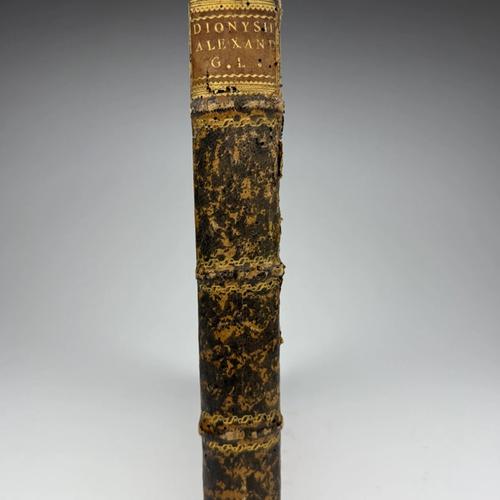
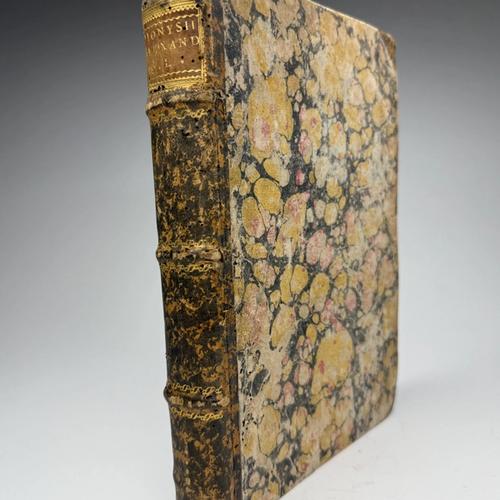
Estienne's Compendium of Ancient Geography
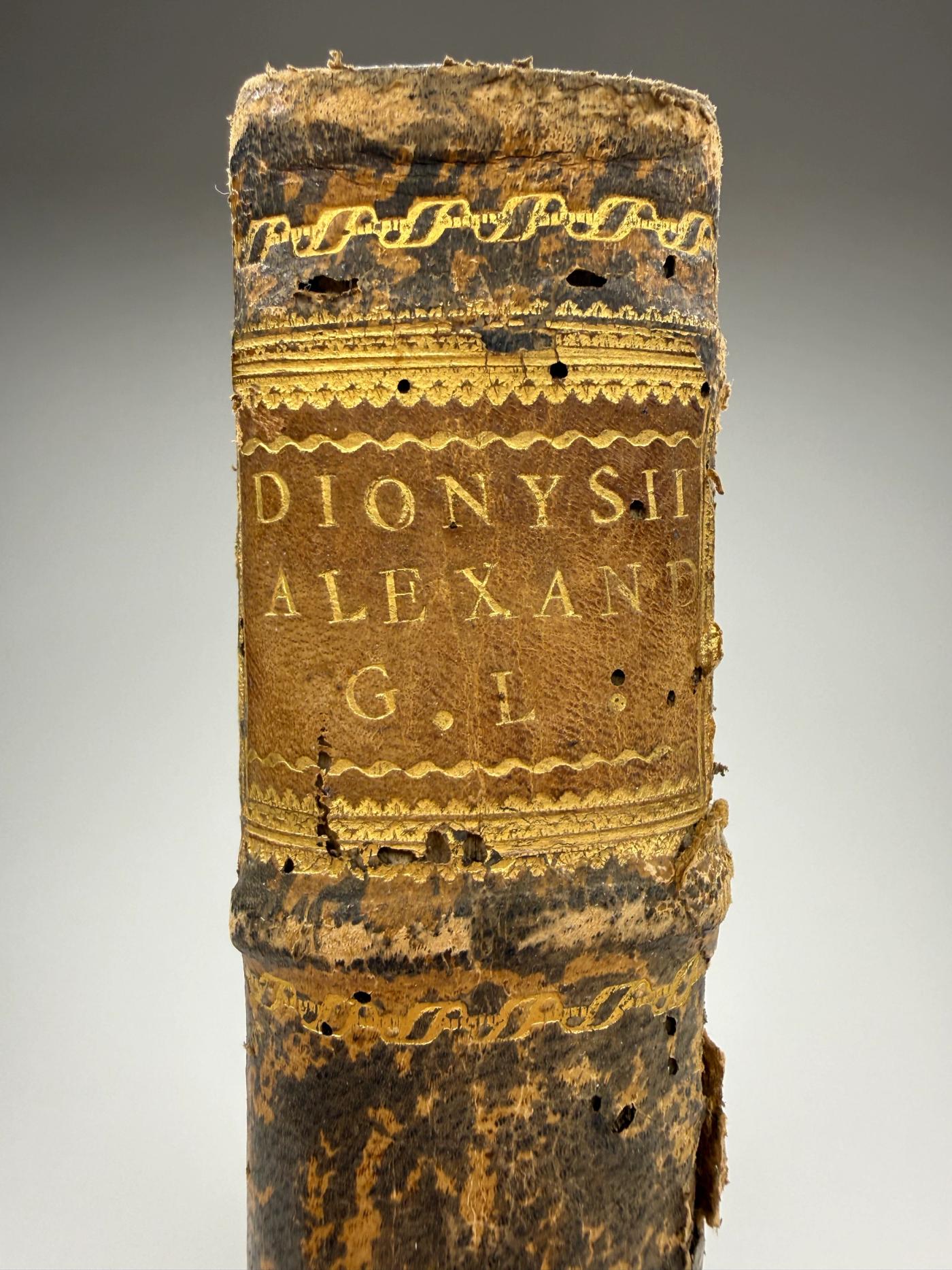
Four ancient geographies gathered into one volume by the most formidable Greek scholar-printer of the sixteenth century: the Periegesis of Dionysius of Alexandria, a tour of the inhabited world in Greek hexameters; the De chorographia of Pomponius Mela, the earliest surviving Latin geography; the Cosmographia ascribed to Aethicus; and the Polyhistor of Solinus, the compendium of marvels through which much of Pliny reached the Middle Ages. Estienne prints Eustathius’s Byzantine commentary on Dionysius alongside his own literal Latin version and annotations, with Olivarius on Mela, Simler on Aethicus, and the emendations of the Jesuit Martín Antonio Del Rio on Solinus.
The title page of this copy has been expurgated. Three passages are struck through in an early hand, and all three are Protestant names: Henri Estienne’s, where the title credits him with the literal translation of Dionysius; that of Josias Simler, the Zurich Reformed theologian, where his scholia on Aethicus are announced; and Estienne’s again in the imprint at the foot of the page, where Excudebat Henricus Stephanus has been drawn through, leaving only the verb and the year. Del Rio, a Jesuit, is left untouched. The scholarship was wanted; the scholars were not.
Beneath the deletions, in the same period, an ownership inscription: Bibliothecae Communis — the common library of a religious house or college. The two marks belong together. A Catholic institution acquired a Genevan book it needed for teaching, and made it admissible by putting a pen through the heretics on the title while leaving the text entire. Copies expurgated in this way are the ordinary evidence of how the Index was actually lived with, and they are a good deal scarcer than the books themselves.