Illuminated Manuscript Leaf
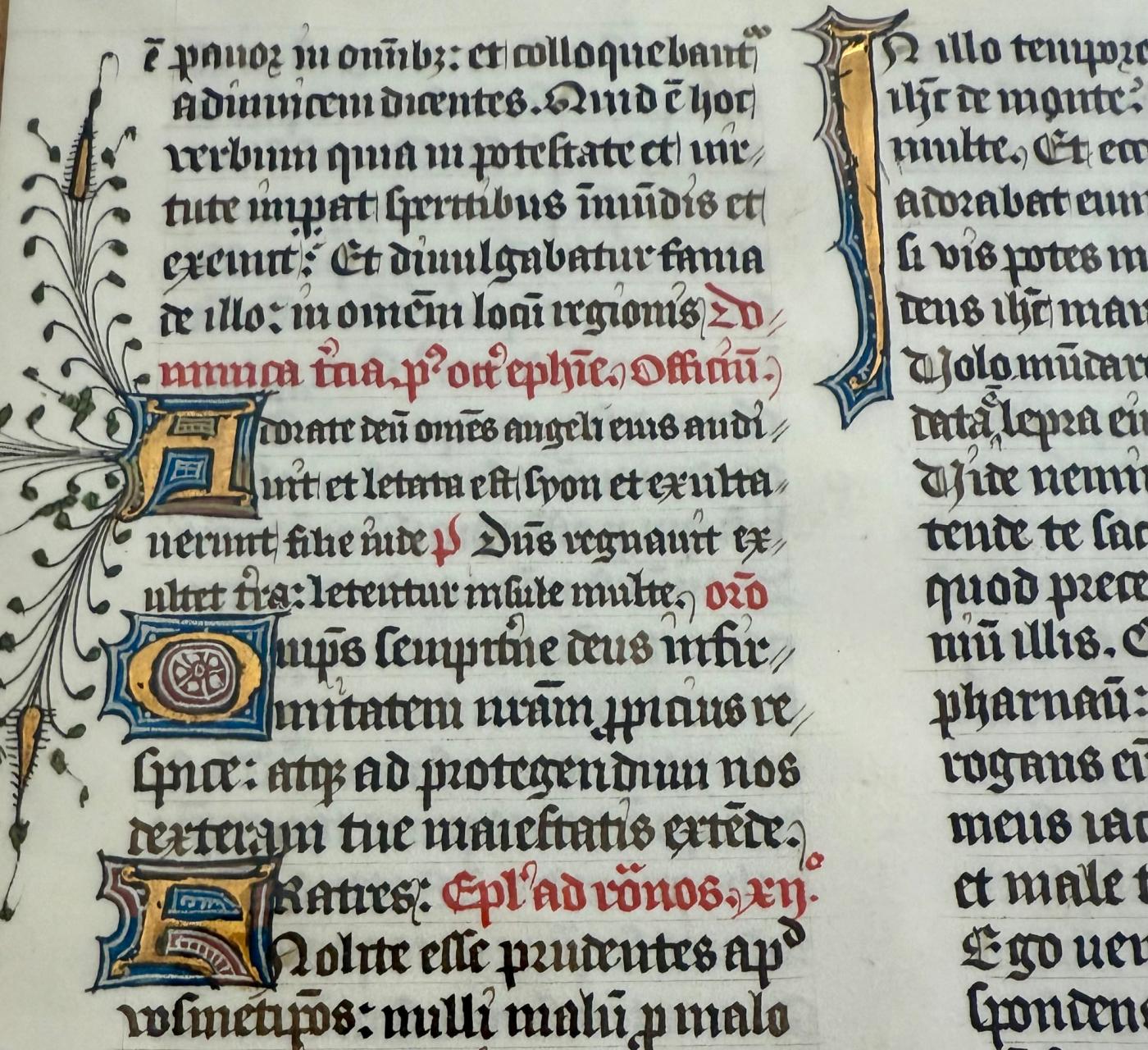
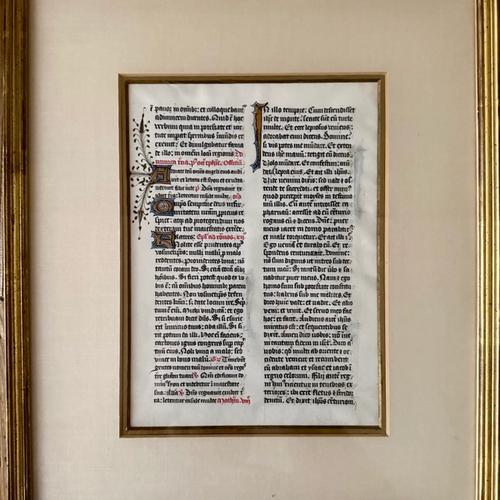
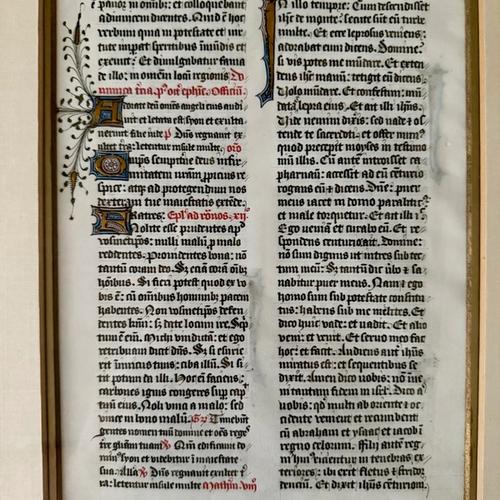
A particularly fine illuminated Medieval manuscript leaf, 15th century. Two columns of gothic script, rubricated, with four illuminated initials with original gold leaf, elaborate filigree flourishes in left margin. Guidelines preserved, traces of text written on verso visible (including at least two further illuminated initials to proper left margin and intercolumnium of verso). In a giltwood frame, linen mat with a gold undermat. Not examined out of frame.
A leaf from a particularly fine and elegant 15th century Missal, containing texts and instructions for the celebration of Mass. The first initial in the left column begins the ‘adorate deum’, traditionally part of the Mass on the fourth Sunday after Epiphany: adorate deum omnes angeli eius, ‘Worship God, all you his Angels.’ Further down in the left column is an extract from Romans 12:17: nulli malum pro malo reddentes providentes bona non tantum coram Deo sed etiam coram omnibus hominibus, ‘Recompense to no man evil for evil…’ (KJV). The right column begins with a long passage from Matthew 8:1: cum descendisset Iesus de monte…, ‘when Jesus descended the mountain…’
An old gallery label on the back of the frame identifies the leaf as belonging to the Use of Sarum, a version of the Latin rites developed at Salisbury cathedral in the eleventh century, and prevalent in Britain and northern Europe until the Reformation. We have been unable to identify anything that expressly suggests the Use of Sarum over the Roman Rite. The script suggests the manuscript was copied in the Low Countries or perhaps Northern Italy, so either would be possible.