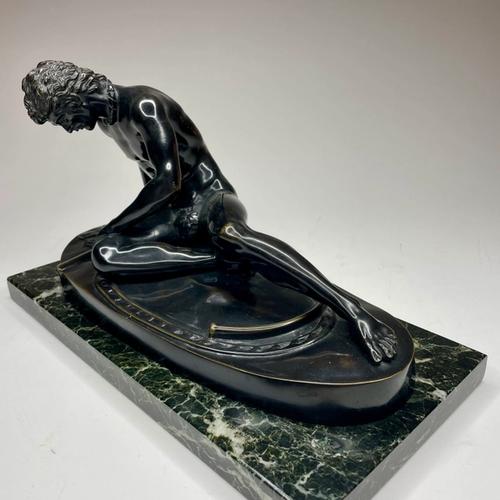
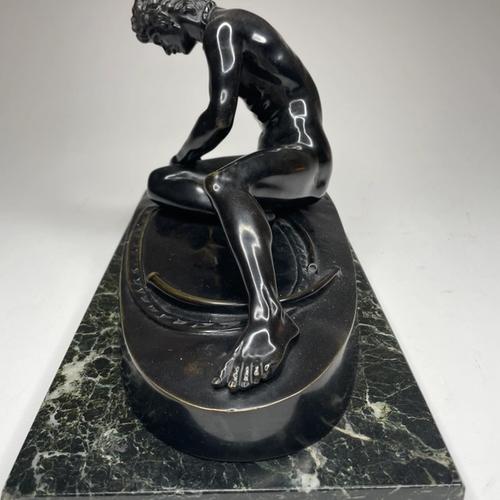
The Dying Gaul
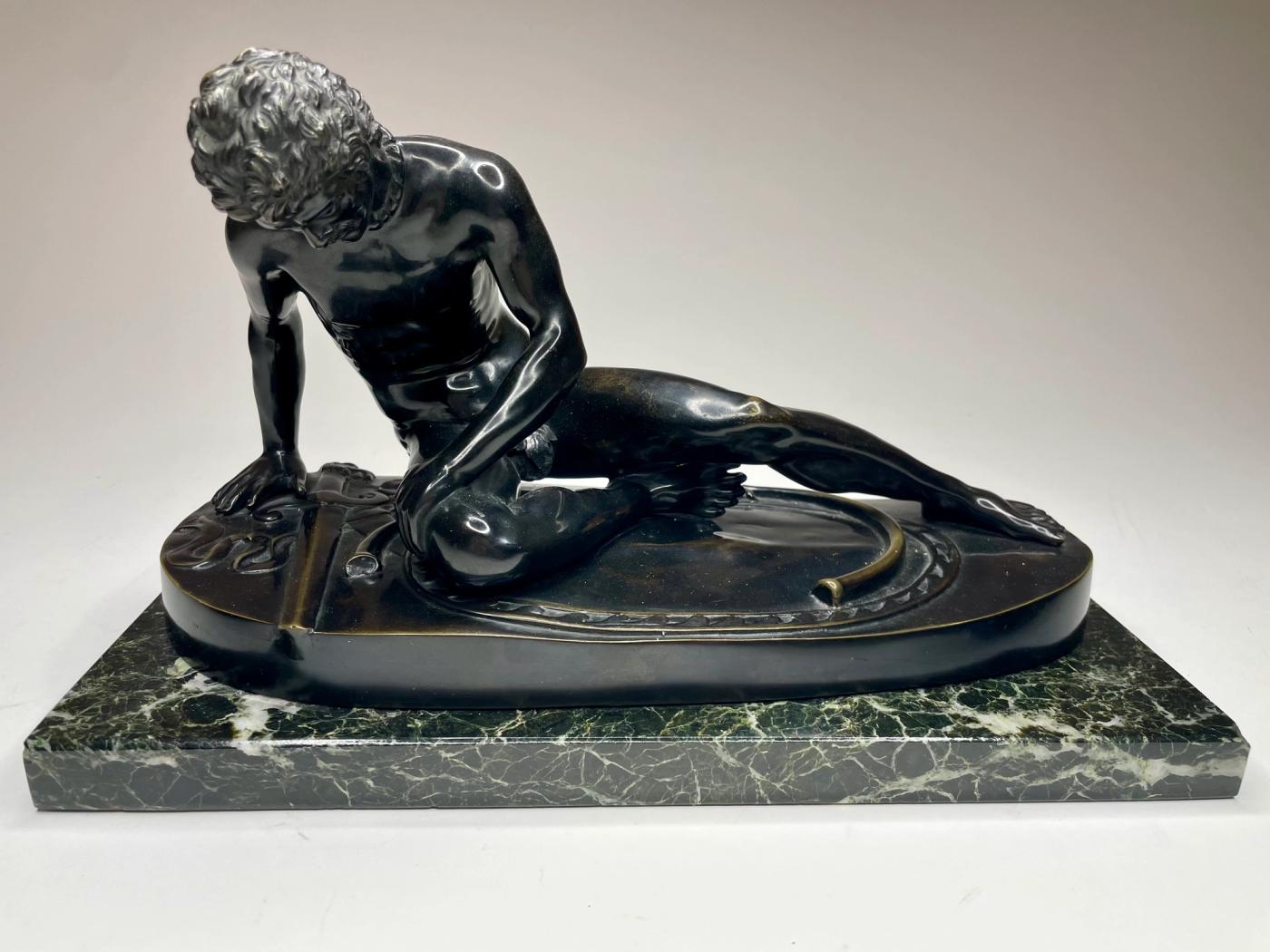
The sculpture on which the present copy is based was discovered in the early 17th century in the ‘Gardens of Sallust’ on the Pincian Hill in Rome, and entered the collection of the Capitoline Museum in the 18th century. Originally misinterpreted as a representation of a dying gladiator, the neck torque and hair style led to a reidentification as a Gaul in the 19th century. It is presumed that the ancient marble sculpture was in turn a copy of an original Hellenistic Bronze, perhaps commemorating the Victory of Attalus I of Pergamum (269–197 BC) over invading Celtic tribes in the 3rd century BC.
The sculpture is one of the most celebrated to have survived from antiquity. “Throughout its history [the Dying Gaul] has been greeted with universal enthusiasm . . . It quickly entered an inner sanctum of the ‘musée imaginaire’ of educated Europe and it is one of the few statues . . . whose reputation remains high.” F. Haskell and N. Penny, Taste and the Antique: The Lure of Classical Sculpture, 1500–1900 (New Haven and London: Yale University Press), pp. 224–5.
Many diminutive copies of middling quality are readily available on the market, but examples such as ours, with a particularly fine patina in ‘Pompeian black’ with high luster, mounted on a green marble base, are relatively rare.