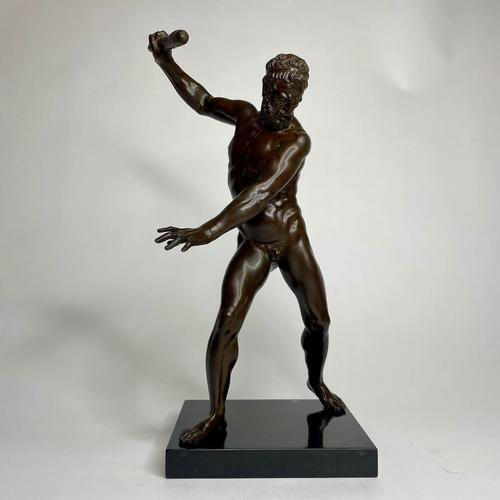
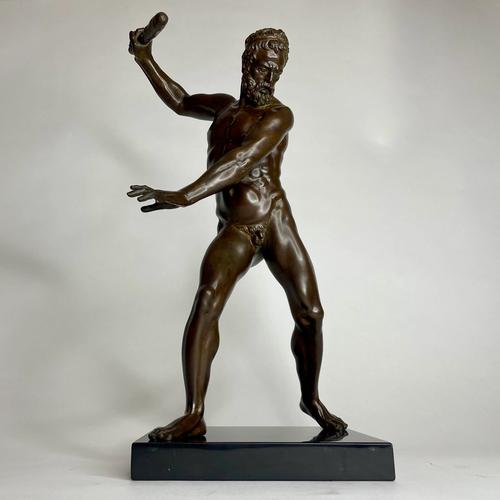
Hercules Wielding his Club
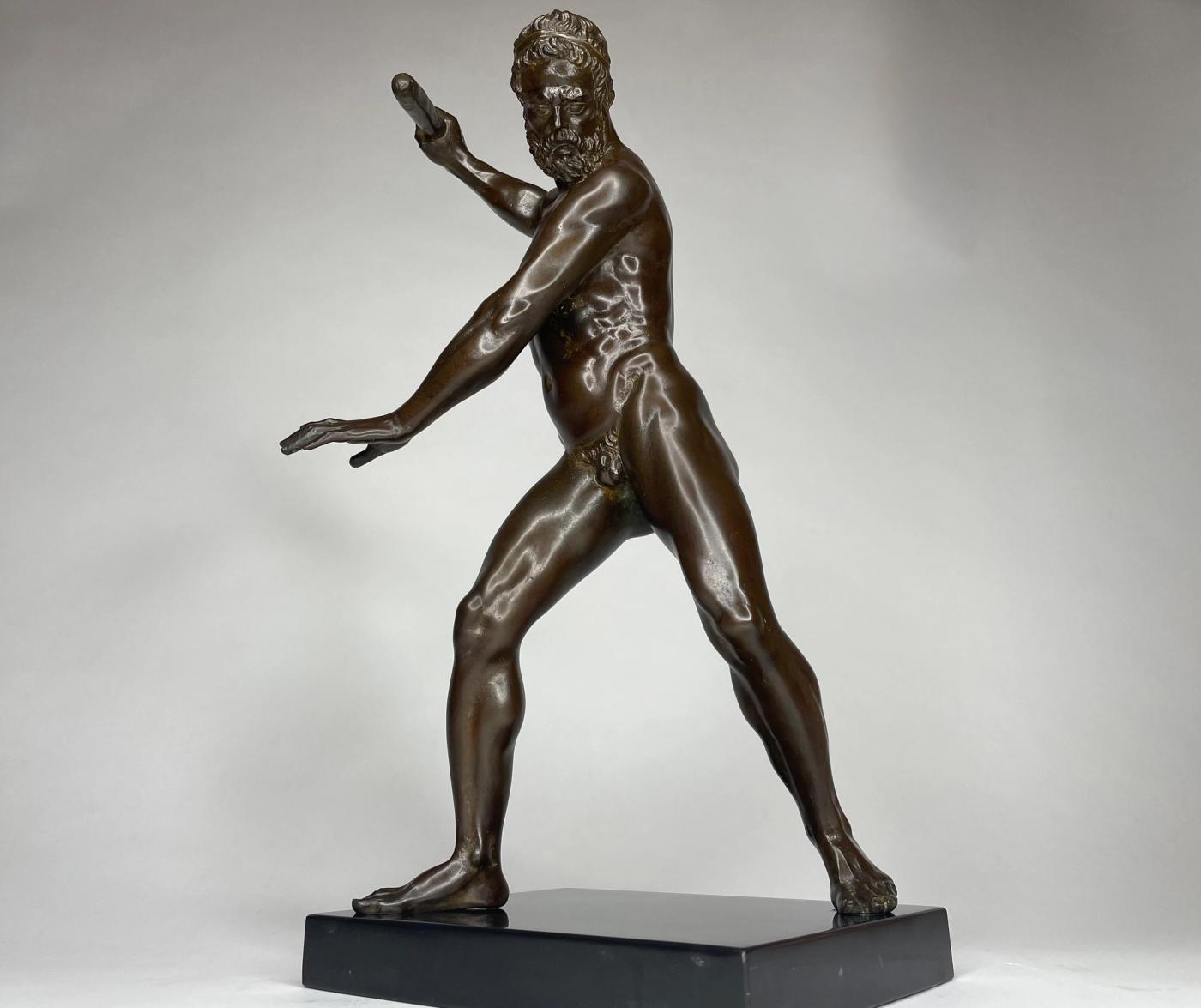
The figural composition represented by the present sculpture ultimately derives from Giambologna’s (Jean de Boulogne, 1529–1608) monumental marble sculpture of Samson Slaying a Philistine (c. 1560), now in the Victoria and Albert Museum in London. Giambologna later reworked the figure of Samson into one of Hercules wielding a club for a series of silver miniatures representing the twelve labours of Hercules for Francesco I de’ Medici in 1580. Contemporary copies were then made in bronze, including by Giambologna’s apprentice and successor, Antonio Susini (1558–1624). Numerous castings deriving from Susini’s were made throughout subsequent centuries.
The sculpture is particularly characteristic of Mannerist style, with the muscular and contorted figure of Hercules freezing in time a moment of intense action and dynamism.
The Marinelli foundry is one of the last great bronze foundries left in Italy, with a huge proprietary inventory of plaster casts made directly from original models.