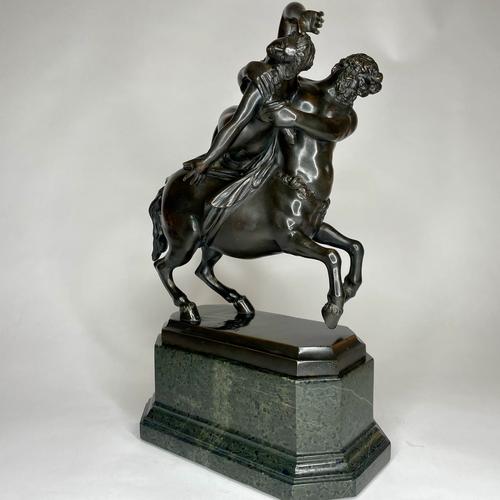
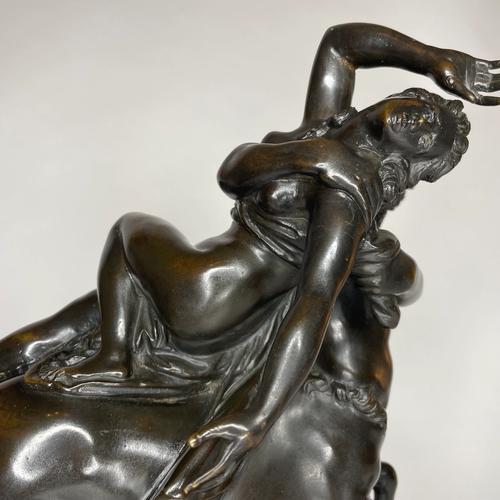
Nessus and Deianira
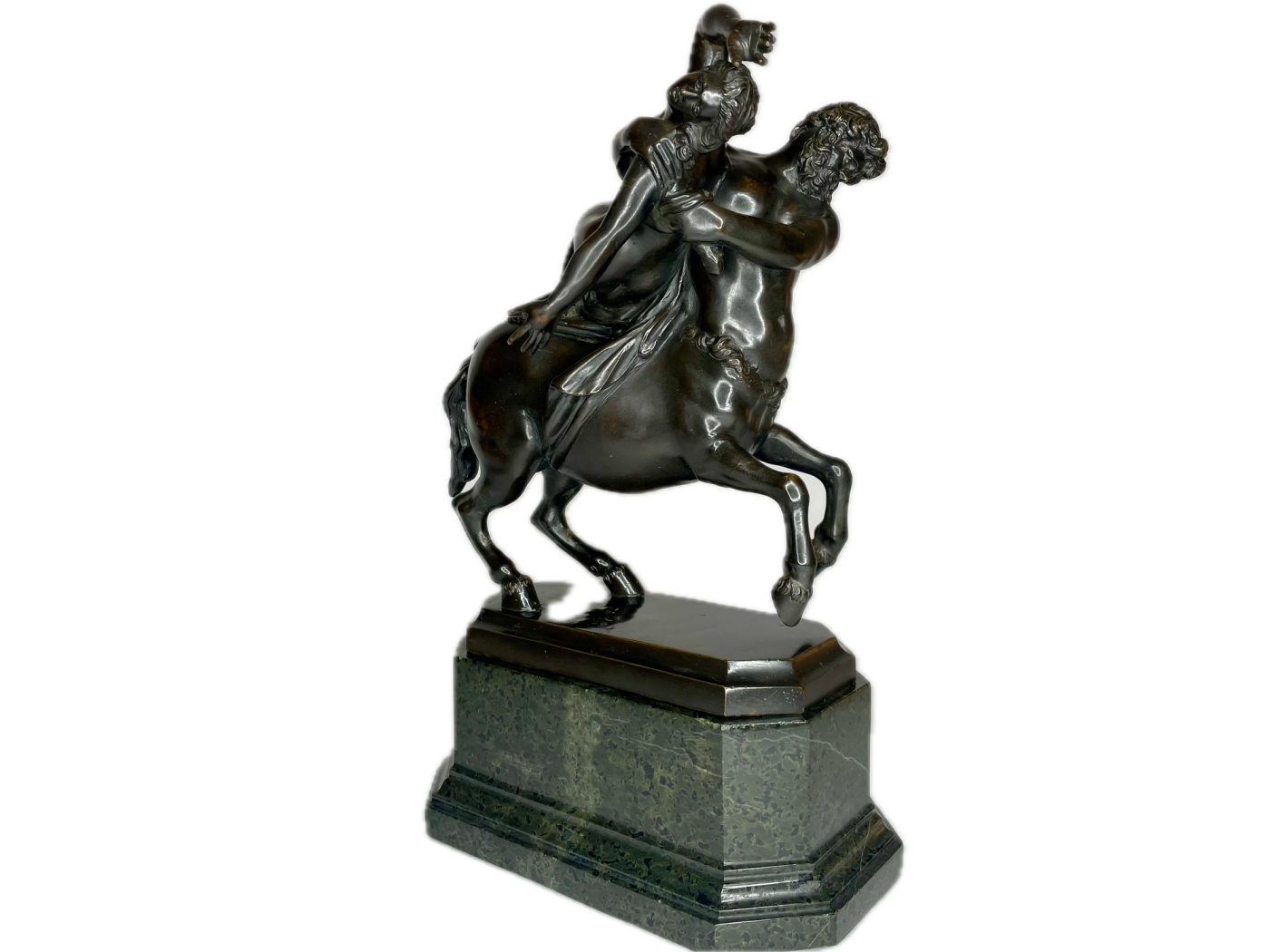
Though not one of the twelve labours, the present sculpture captures a critical moment from the life of the Greek hero Hercules. As recounted in Sophocles’ Trachiniae and Ovid’s Metamorphoses (amongst other texts), the centaur Nessus offers to ferry Hercules’ wife, Deianira, across a swollen river, while the hero swims. Once Hercules makes it to the further shore, Nessus attempts to abduct Deianira, but Hercules slays the centaur and rescues his wife (with an arrow in some versions of the myth, by hand in others).
Giambologna’s original (now lost) seems to have been commissioned by the Salviati family of Florence sometime before 1577. A casting attributed to Gianfrancesco Susini — the nephew of Antonio Susini — formerly in the Rothschild collection, was offered by Christie’s, London, on 2 July 2024. The casting offered here is an example of the ‘type A’ identified by Charles Avery, and comparable to one in the Metropolitan Museum of Art in New York (object number 55.113).