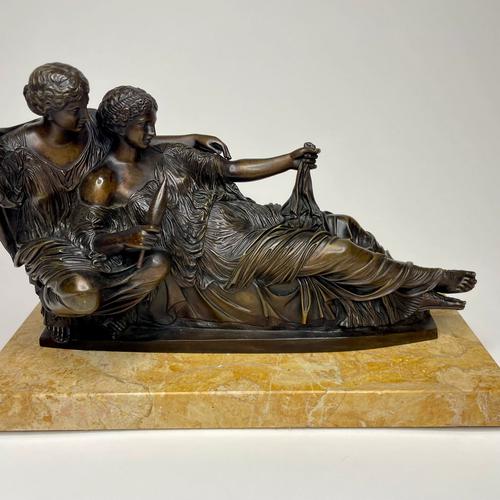
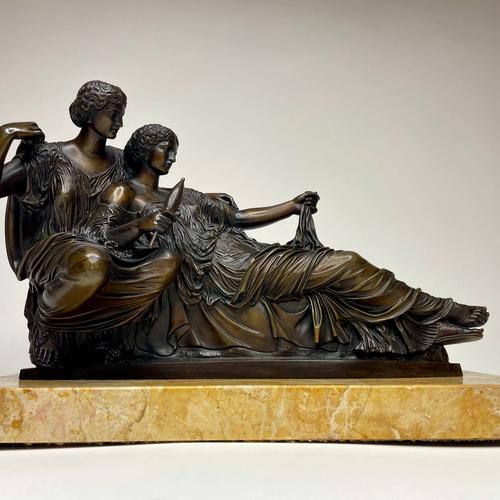
Bronze Figural Group from the East Pediment of the Parthenon
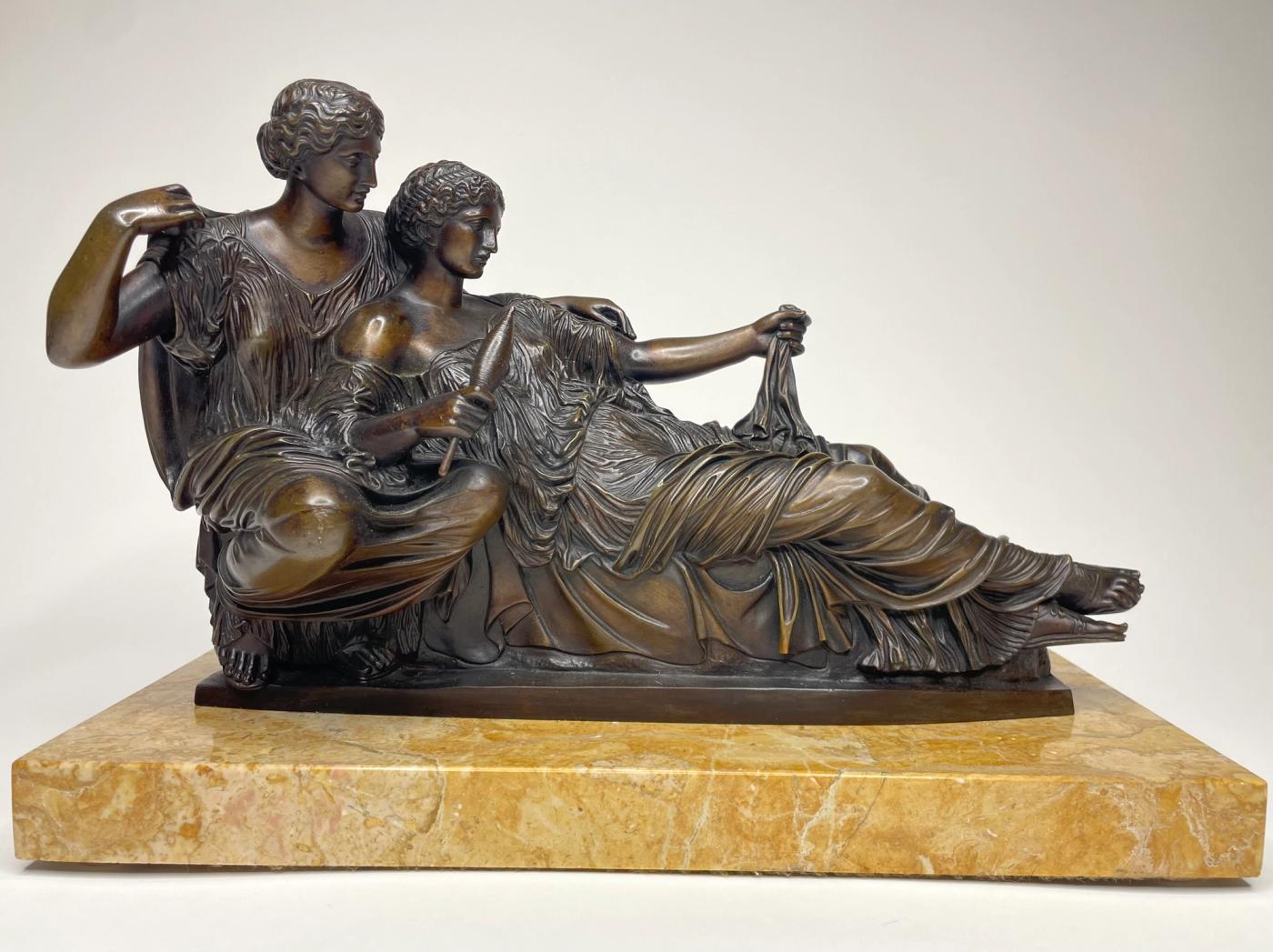
The present bronze derives from a 19th century interpretation by Jean-Baptiste Auguste Clésinger (1814–1883) of figures L and M from the east pediment of the Parthenon, executed by the Athenian sculptor Pheidias in the 430s BCE. The Parthenon marbles are damaged — both figures are missing their heads and arms — and so Clésinger’s version, reproduced here, represents a hypothetical reconstruction and identification of the figures. In the 19th century, as reflected in Clésinger’s model, the figures were interpreted as Clotho and Atropos, two of the Three Fates (along with Lachesis) who spun the thread of human life. Hence the distaff in the reclining figure’s right hand and bunch of cloth in her left. (Different castings from other foundries show slight variation, for instance with the reclining figure holding a book in her left hand, and a distaff in the left hand of the seated figure behind her.) However, modern scholarship has rejected the identification of the Parthenon figures as the Fates, and instead tentatively identifies them as either Dione and Aphrodite, or Thalassa (the Sea) and Gaia (the Earth).
Irrespective of the question of reconstruction and identity, the present sculpture is a fine and rare example of a 19th century bronze modelled on the famed Parthenon Marbles. The original figures are in the British Museum, London — view in the British Museum collection.