1 / 19
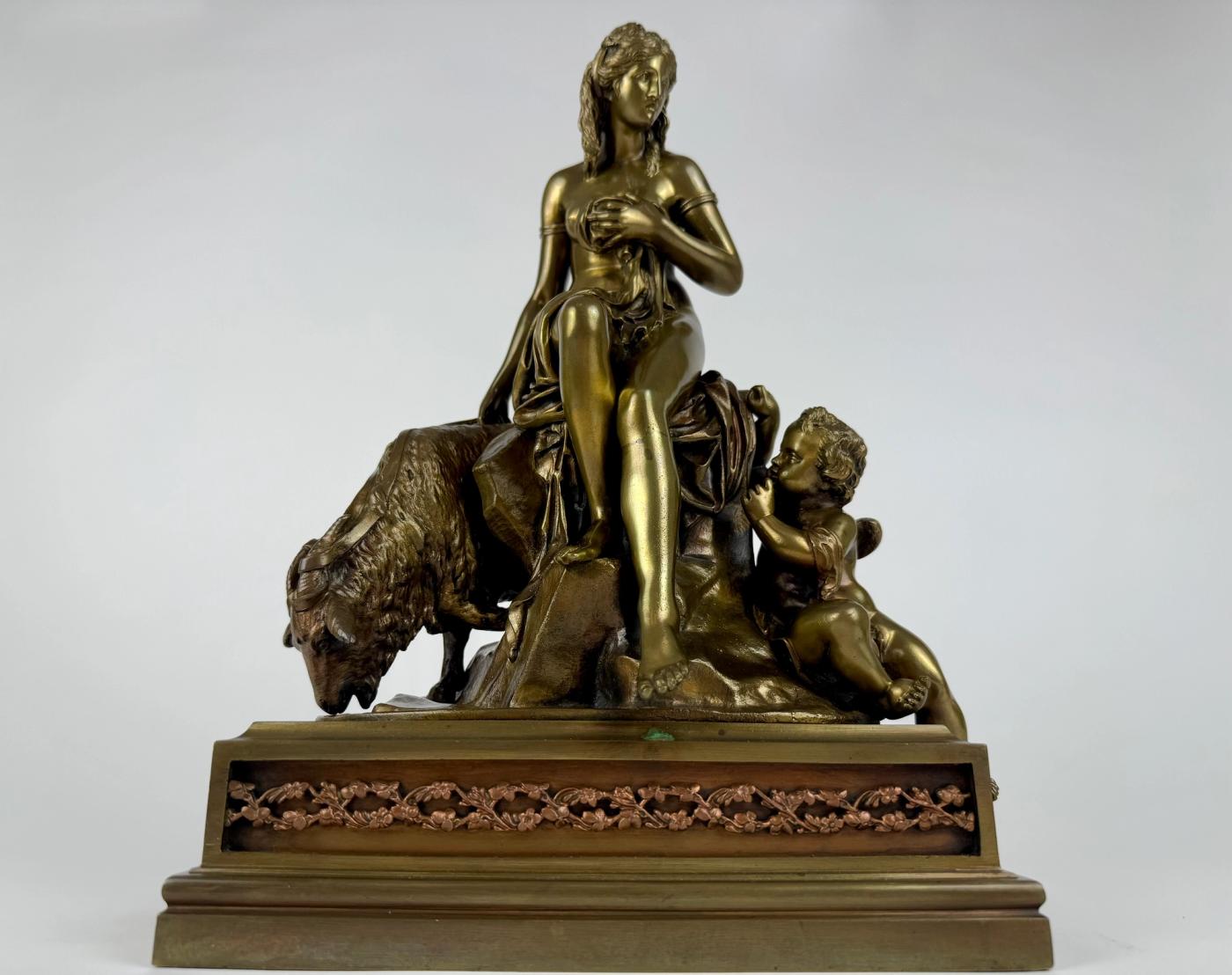
The original sculpture on which this example is based was commissioned by Louis XVI from Pierre Julien for the Dairy of Marie Antoinette at the Château de Rambouillet. Kley’s interpretation of Julien’s original adds a third figure, the infant / cherub to the proper left of the sculptural group. In some respects, Kley’s composition is more successful than Julien’s original, with the additional figure balancing the group in accordance with the golden ratio. Particularly interesting is the intent and identity of the third figure. Putti have a tedious tendency to insert themselves in all number of artistic compositions from the Baroque period onwards. The myth however does call for a child — the infant Zeus (Roman Jupiter), whom Amalthea and / or her goat suckled in seclusion on Crete to protect the infant from his father Kronos (Roman Saturn), intent on devouring his children to prevent them usurping the throne of heaven. An early sculpture attributed to Bernini, The Goat Amalthea with the Infant Jupiter and a Faun (before 1615, now in the Galleria Borghese, Rome) depicts an infant and un-winged Zeus, which to an incautious eye could be interpreted as a generic putto. It is thus almost certain that in its original conception, Kley’s infant figure is meant to represent the infant Zeus called for in the mythic tradition, and that the weight of representational expectations led to the addition of wings to the child’s figure.
Louis Kley was a successful and prolific sculptor, producing both original works and reproductions of earlier sculpture. He regularly exhibited at the Paris Salon, and won the Silver Medal at the Universal Exposition in Paris in 1889.
Purchase & Shipping
To purchase this piece or enquire about shipping, please use the Purchase or Enquire button above.