1 / 9
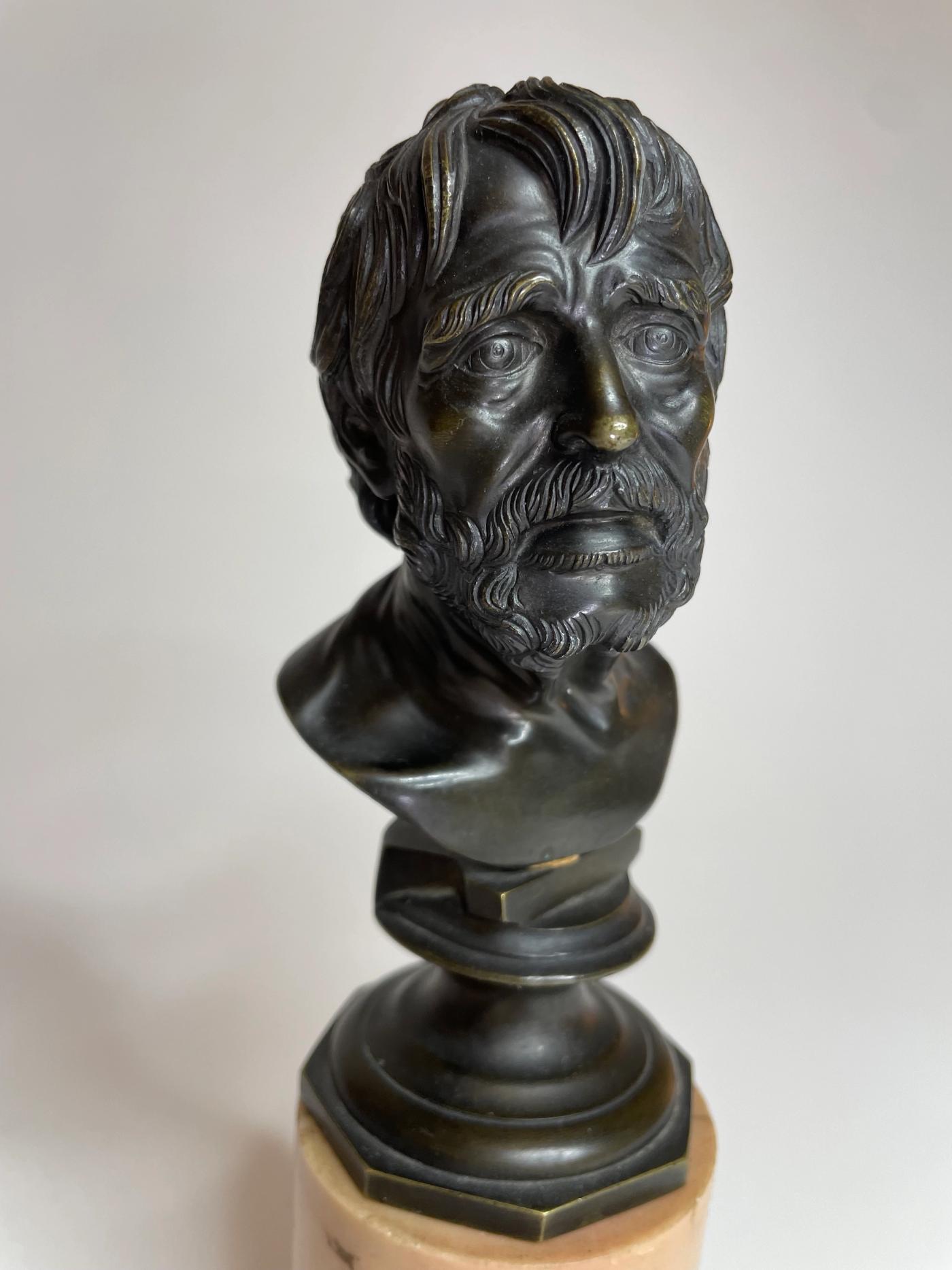
Numerous busts of a dishevelled and emaciated face have been excavated from antiquity — all evidently deriving from a common source. In the 16th and 17th centuries, the nature of expression suggested the stoic renunciation of wealth and adornment, and thus the face came to be associated with the Stoic philosopher Seneca the Younger (c. 4 BC–65 AD). A particularly fine example was excavated from the Villa of the Papyri in Herculaneum in 1754, on which the present copy is based. Later in the 18th century, under the influence of the archaeologist and foundational figure in art history Johann Winckelmann, the identification with Seneca was rejected, with an identification with Hesiod — the peasant farmer-poet from Boeotia, author of the Works and Days and Theogony — being more often accepted, though other identifications have also been proposed.
Purchase & Shipping
To purchase this piece or enquire about shipping, please use the Purchase or Enquire button above.